Blog
Clanker or Helpful Tool?
Back to Blog(s)
September 9 2025
September 9 2025
How Floor Cleaning Robots Elevate the Role of Custodial Staff
“Clanker.” Dubbed "frontrunner” for word of the summer by NPR, it’s a somewhat tongue-in-cheek derogatory term for robots and AI that has skyrocketed in popularity thanks to social media. Used both in jest and anger, the word reveals a growing anxiety among the general public about the effects of automation on our way of life.
Service robots, such as food delivery robots, automated floor scrubbers, and inventory management robots, are frequent recipients of this dubious epithet on social media. And it’s obvious that when many people think about automation, they picture machines replacing people. But in reality, service robots are merely useful tools enabling workers to do more with the time they have each day.
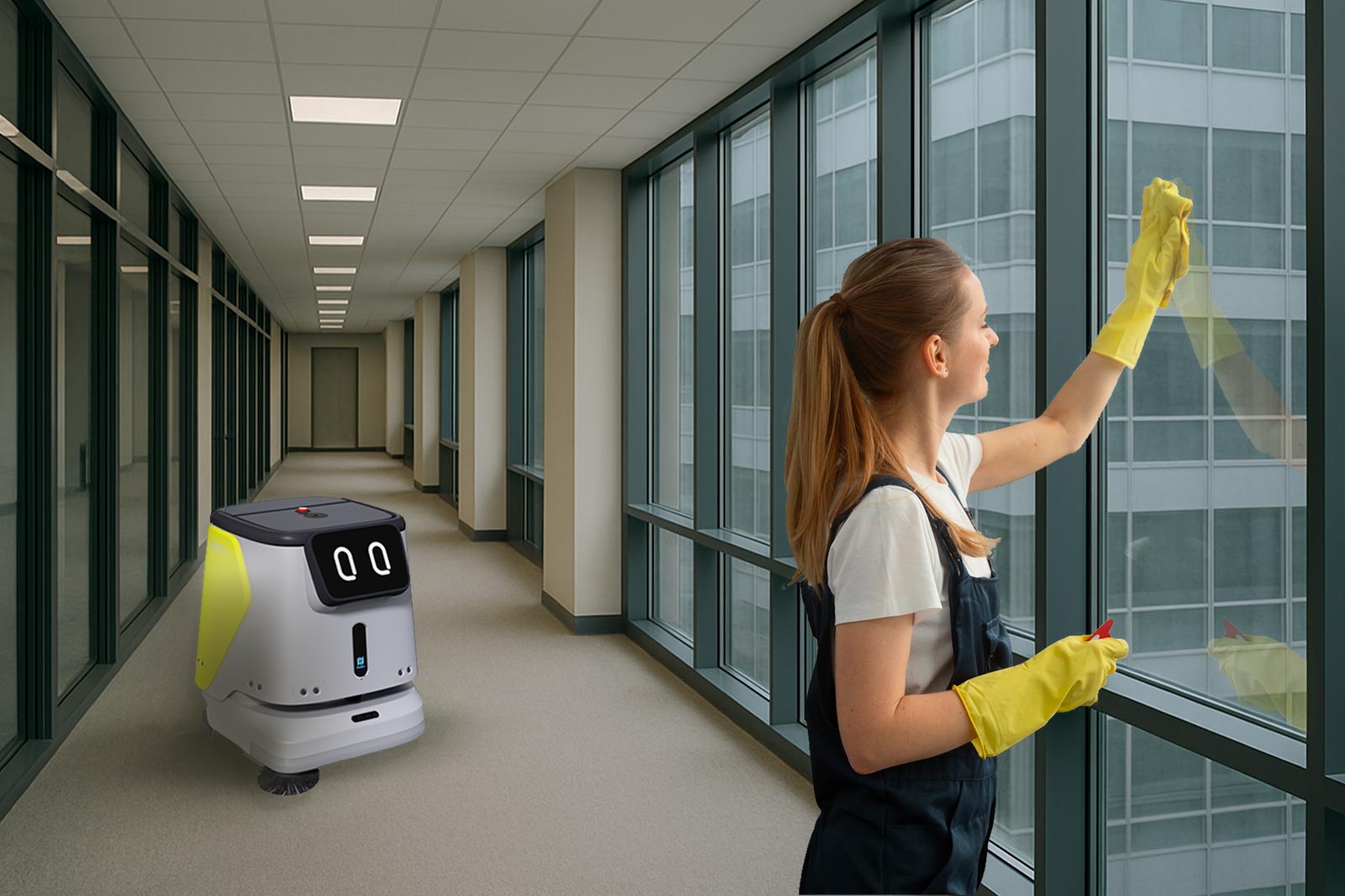
Let’s focus specifically on autonomous floor cleaning robots. These useful machines are designed to perform the most repetitive, physically demanding cleaning tasks, freeing facilities maintenance staff to focus on higher-value work that requires judgment, flexibility, and a personal touch. Rather than replacing custodians, floor cleaning robots are providing an extra level of support to the custodial role, and even opening up new career opportunities within the field.
The Strain of Traditional Custodial Work
Custodial staff perform some of the most essential work in keeping facilities safe, welcoming, and compliant. But the work itself can be grueling.
Hours of vacuuming, pushing heavy mops, and handling bulky equipment take a physical toll. Repetitive strain injuries are common. The repetitive nature of the job, combined with labor shortages and high turnover rates in the industry, makes it difficult for many facilities to maintain a stable, satisfied workforce.
Automation offers relief. By handling the heavy, monotonous floor cleaning tasks, autonomous robots give staff a break from some of the most repetitive and physically punishing aspects of the job. Instead of being defined by repetitive labor, custodial work can be refocused on more skilled, detailed tasks.
Robots as Tools, Not Replacements
Autonomous floor cleaning robots excel at tasks like sweeping, scrubbing, and drying floors—jobs that require consistency and repetition, but not human judgment. By delegating these jobs to robots, staff are free to focus on work that only people can do:
- Detailed cleaning of overlooked areas, or areas requiring impeccable hygiene standards
- Sanitizing high-touch surfaces like restroom fixtures, door handles and elevator buttons.
- Assisting building occupants, responding to unexpected maintenance issues, and managing special requests.
This division of labor creates a win-win scenario. Robots do what they do best—repeatable, predictable work—while people do what they do best—flexible, detail-oriented work that requires adaptability. Far from being replaced, custodial staff gain time and energy for the tasks that make the most visible and lasting difference.
Improved Job Satisfaction and Retention
Facilities management has long struggled with high turnover. One of the biggest drivers is the physical strain and repetitive nature of the work. Robots directly address this by eliminating much of the drudgery.
With less bending, pushing, and lifting, custodial staff experience fewer injuries and less fatigue. At the same time, their role shifts toward more skilled responsibilities like monitoring and maintaining cleaning robots, ensuring overall quality, and handling specialized maintenance needs.
This not only makes the job more sustainable but also boosts morale. Workers feel more valued when they’re trusted with oversight and decision making. The result: lower turnover, higher job satisfaction, and a more stable custodial team.
Upskilling and New Roles for Custodians
When robots are integrated into a facility as key tools, the custodial role can evolve. Staff with an interest in the technology can become robot operators, supervisors, and even training specialists, expanding their skill sets and career opportunities.
Robots still need people: to be mapped, monitored, and maintained. More importantly, they need people to guide their use in the larger context of facility management. Through both day-to-day robot usage and targeted upskilling programs, custodial staff can acquire the skills needed to manage robotic fleets effectively, opening doors to diverse career paths within the facilities management field. Instead of being defined by manual labor, custodians become empowered professionals managing a blend of human and robotic resources.
Safer Workplaces for All
Floor cleanliness is a critical safety issue. Slips, trips, and falls are some of the most common workplace accidents, and they can be directly linked to the condition of the floors. The National Safety Council reports that slips and falls are the leading cause of workplace injuries, costing businesses billions of dollars annually in workers’ compensation claims and lost productivity.
According to Occupational Health & Safety magazine, “A significant number of slip and fall injuries that are caused by problems with the walking surface are due to floors that are wet or have a dry contaminant, such as sand, dirt, or another granular material on them.” Overlooked floor cleaning and maintenance increases the risk of these accidents.
Maintaining clean and dry floors, especially in high-traffic areas, is a preventive measure that can save facilities from these potential risks, and it’s made all the easier when the floor cleaning process is automated through robotics. Using autonomous robots for the major floor cleaning tasks also minimizes custodians’ exposure to dirty water and harsh chemicals, reducing health risks for staff. And by reducing repetitive physical strain, robots help prevent injuries that can sideline workers and increase costs.
Elevating the Profession
Perhaps the most powerful impact of cleaning robots is cultural. For too long, custodial work has been undervalued, seen as low-skill and high-turnover. Robotics helps change that perception.
When staff are given modern tools, trained in new technologies, and trusted with oversight roles, the profession itself is elevated. Custodians become tech-enabled professionals, contributing directly to workplace safety, occupant wellbeing, and organizational sustainability goals.
The rapid integration of autonomous robots into facilities management isn’t just transforming how we maintain cleanliness in our spaces but is also creating unique opportunities for companies to reimagine what a career in jan-san and facilities management looks like.
Facilities that embrace robotic-assisted custodial operations will not only see cleaner floors, but also stronger teams, happier employees, and a workplace that’s ready for the future.
Interested in learning more? Get in touch with our team today!
Leave a comment below...