Blog
Operational Efficiency at Scale
Back to Blog(s)
December 3 2025
December 3 2025
How Facilities Can Reap the Full Benefits of Cleaning Automation
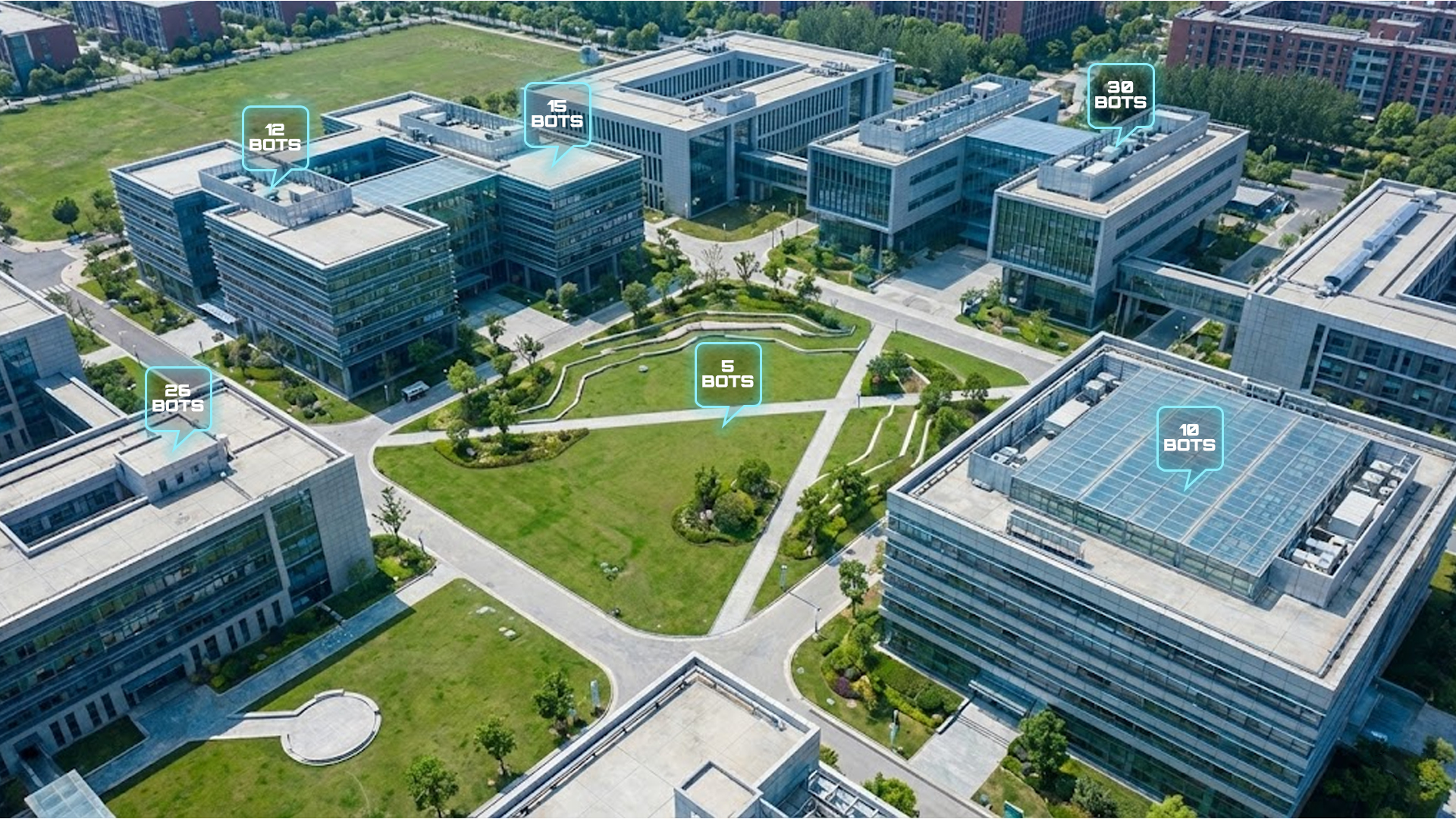
Large campuses, logistics centers, hospital networks, retail chains, and major corporate facilities are increasingly discovering that deploying robot fleets produces results that simply aren’t achievable with isolated, one-off automation. Scaling robotics across an entire organization creates new efficiencies, unlocks enterprise-level insights, and reshapes how operations teams think about cleanliness, staffing, and long term planning.
So what really happens when robots move from one-and-done to a coordinated, highly integrated fleet? And what do facilities teams need to know to prepare for the next stage of automation?
Let’s explore how scaled deployment works—and why it’s becoming a strategic advantage for modern facilities.
You Create a Predictable, Repeatable Standard Across Every Facility
One of the biggest challenges in multi-site organizations is inconsistent cleaning quality. Different teams, staffing levels, and shifts mean results vary widely from one building to another. With autonomous robots, that variability decreases dramatically.
When robots operate at scale:
- Cleanliness standards become unified across the organization.
- Every facility receives the same level of coverage and performance.
- High-traffic areas are maintained with consistent frequency.
- Administrators gain confidence in knowing exactly what’s being cleaned and when, thanks to centralized facilities management software like Pringle NOC’s centralized dashboard, which aggregates real-time data from every robot in the fleet.
Operational Workflows Become More Efficient and Less Labor-Dependent
Scaling to dozens of robots fundamentally changes how work gets done. Staff transition from “performing the cleaning” to “managing the cleaning.”
- Robots autonomously manage scheduled floor tasks.
- Custodial teams handle detail cleaning, high-touch disinfection, deep scrubbing, and event turnaround.
- Supervisors use Pringle NOC to monitor robot status, coverage maps, and performance metrics in real time, redeploying units dynamically to meet shifting demands.
This structure also makes operations more resilient:
- Fewer disruptions from staffing shortages.
- Reduced reliance on temporary labor.
- Greater scheduling flexibility—because NOC gives clear visibility into which robots are free, charging, or working.
- Smoother peak-season operations, with smart deployment based on data-driven needs.
As labor markets remain unpredictable, robotic fleets can help stabilize facility operations by absorbing a significant portion of baseline workload.
Fleet Management Becomes a Core Capability
When organizations run multiple units of robots, centralized fleet management becomes a core anchor of the entire facilities operation. Instead of managing each robot individually, teams shift to monitoring the fleet as a whole through cloud-based dashboards like Pringle NOC.
A scaled robotic program benefits from:
Unified visibility into all buildings and zones
Every robot reports its status, cleaning progress/history, coverage maps, and battery levels in real time.
Alerts and diagnostics that reduce downtime
Teams know immediately if a robot encounters a blockage, needs service, or fails to deploy on a scheduled cleaning run.
Scheduling across multiple sites
Instead of setting each robot manually, cleaning programs become coordinated and data-driven.
Performance benchmarks and comparisons
Leaders can evaluate efficiency and adherence to SOPs across buildings or teams and adjust accordingly. This bird’s-eye view makes managing multiple robots just as easy as managing one.
Data Turns Into a Strategic Asset
With a fleet of robots operating continuously, facilities begin generating extremely valuable data:
- Daily cleaning coverage and frequency
- Heat maps of high-use areas
- Time of day when cleaning is most efficient
- Logs of obstacles, incidents, or deviations
- Battery health trends
- Consumables usage
- Maintenance predictions
Instead of guessing where staff should focus, managers can rely on hard evidence:
- Which zones need more frequent cleaning
- Where bottlenecks occur
- How facility usage patterns shift seasonally
- Where additional units might be needed
- How to optimize staffing for peak times
A single robot provides insights. A fleet provides analytics-driven operational intelligence.
Scalability Introduces New Operational Capabilities
Large robotic deployments unlock capabilities that simply aren’t feasible at a smaller scale.
Multi-robot orchestration - In large buildings, several robots can work together to divide and conquer floors simultaneously.
Coverage of facilities that are chronically understaffed - Robots can fill gaps in floor cleaning that humans simply don’t have time to cover.
Redundancy and resilience - if one robot needs service, others can take over its cleaning route without disruption.
Increased responsiveness - When special events, weather impacts, or unexpected messes occur, robots can be redeployed quickly.
Extended cleaning operations - Robots can make full use of low-traffic windows without requiring overtime or night-shift labor.
The cumulative effect is an organization whose buildings stay perpetually cleaner, often at lower operational cost.
Reliability Improves With Scale
When a facility relies on one robot, any downtime is an inconvenience. With multiple units in place, the system becomes more naturally resilient.
Larger fleets offer:
- Redundancy across zones
- Units available to be deployed instantly
- Predictive maintenance based on aggregated data from Pringle NOC to repair or rotate robots before problems escalate
- Replacement units that can be rotated without disruption
A large robotic program is inherently more resilient and reliable, and able to keep cleaning operations on track consistently.
Scaling Robotics Is Becoming the New Normal
What began as pilot deployments—as organizations “dipped their toe” into robotics for facilities maintenance—has now become a long-term strategy. As the technology matures, organizations are discovering that the biggest value of autonomous floor cleaning robots is realized at scale. Large-scale robotic fleets reshape cleaning workflows, improve consistency, reduce operational costs, and give facilities unprecedented visibility into performance.
Whether you’re thinking about expanding your organization’s robotic fleet, or testing the waters with an initial pilot, our robotics experts are here to help. Get in touch, and get started!
Leave a comment below...